Two regulatory changes in 2026 are rewriting the economics of carbon credits for Southeast Asian businesses. Singapore's carbon tax steps up to S$45 per tonne of CO₂e from 1 January 2026, and companies using international carbon credits to offset up to 5% of their taxable emissions must prove those credits are authorised by host countries under Article 6 of the Paris Agreement. Malaysia launches its own carbon tax the same year, beginning at around RM20 per tonne and initially targeting the iron, steel, and power sectors. Both frameworks rely on carbon credits that can be invalidated, reversed, or fail to receive a corresponding adjustment. That is where carbon credit insurance starts to matter.
By the end of this guide, you will know what carbon credit insurance covers, the four risks it responds to, who in Southeast Asia needs it, and why SEA buyers currently place cover through London rather than locally.
This guide is for Chief Sustainability Officers, Heads of ESG, carbon project developers, CFOs, and finance teams at Malaysian and Singaporean businesses with material exposure to the voluntary and compliance carbon markets. We will move from the global frame to the SEA specifics so the piece stands on its own for readers who arrive at the technical sections directly.
Evaluating carbon credit insurance for your Southeast Asian business?
Carbon credit insurance is a new category in SEA but the coverage itself is real and available today through global specialist markets. If you hold credits, are planning a forward purchase, or are financing carbon projects, Emerge can help you access this cover from the markets where it is written.
What is carbon credit insurance?
Carbon credit insurance in Southeast Asia is a specialist commercial policy that protects buyers, project developers, and financiers against the cancellation, invalidation, reversal, or non-delivery of carbon credits after issuance. It sits alongside the credit itself as a separate financial instrument and pays the credit holder a cash compensation if the underlying credit is cancelled or fails to settle. The category is nascent globally, with meaningful capacity written almost entirely through Lloyd's and other London-based markets. In Southeast Asia specifically, the product is moving from optional to essential as Singapore's International Carbon Credit framework and Malaysia's 2026 carbon tax create mandatory demand for credits that must retain their integrity over long performance periods.
Carbon credits are vulnerable in ways that most commercial assets are not. A credit can be valid and tradable on day one, then cancelled years later because a forest burned down, a standards body revised its methodology, or a host country withdrew its authorisation under the Paris Agreement. Buyers carry the financial consequence. Insurance exists because registry buffer pools, while useful, are not sized to absorb large or correlated losses, and because corporate buyers with disclosure obligations cannot accept unhedged contingent replacement liabilities on their balance sheets.
The four risks carbon credit insurance typically covers
The global market has converged around four broad risk categories since the first dedicated carbon insurance products launched between 2022 and 2024. Understanding each matters because policies frequently cover some combinations and exclude others, and because the relevant risk profile differs sharply between a forestry project in Sabah, a rice paddy methane project in Vietnam, and a direct air capture facility in Singapore.
Reversal risk
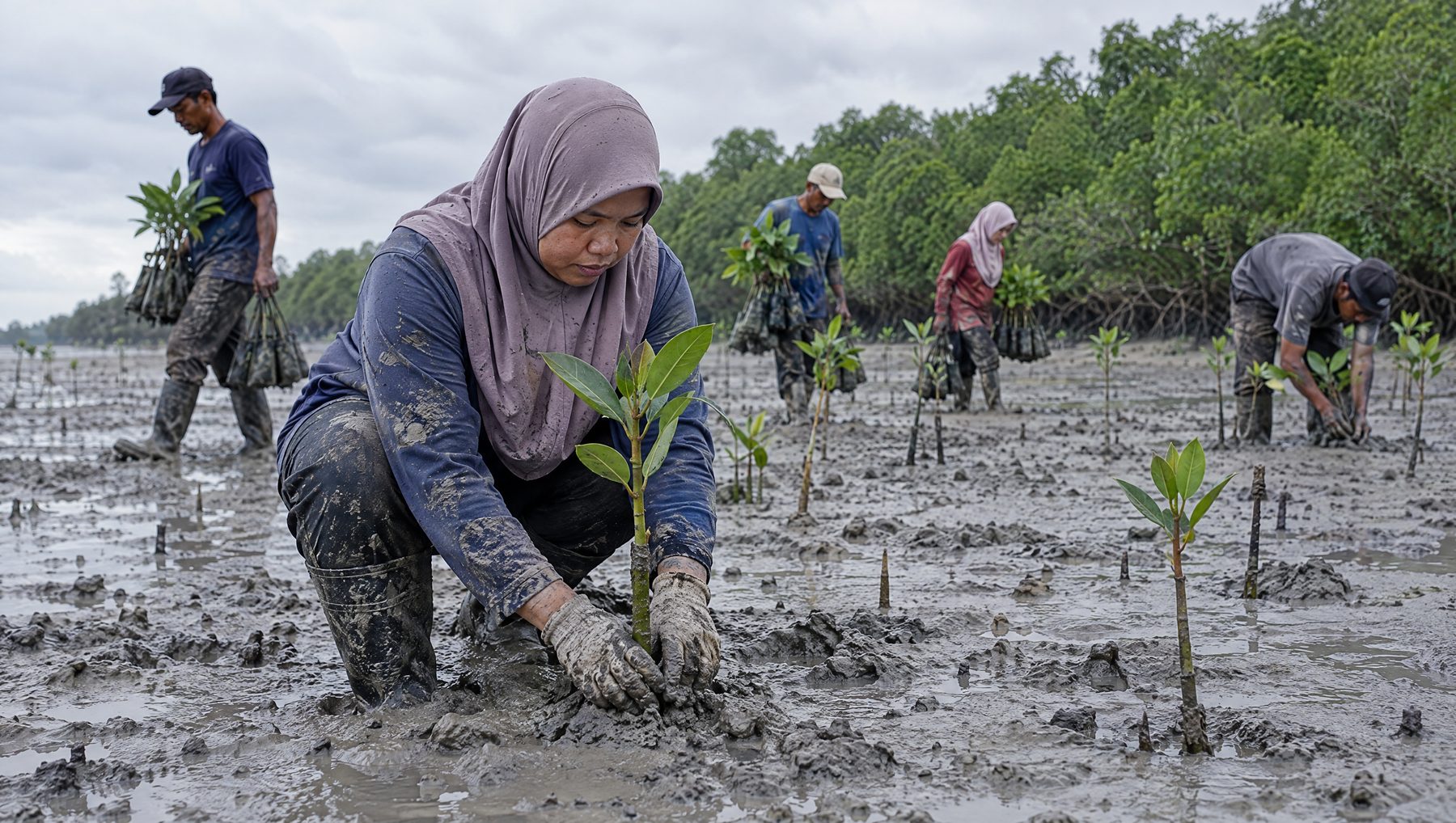
Reversal describes the physical release of previously-sequestered carbon back into the atmosphere. The trigger is usually a natural event such as fire, storm, pest, disease, or drought, but land-use change by a government or subsequent owner can also cause reversal. Nature-based solutions (NBS) projects (forestry, peatland, blue carbon) carry the highest reversal risk. Registries maintain buffer pools that cancel buffer credits to compensate for reversals, but buffer pools can be depleted by catastrophic events and offer only partial protection.
Invalidation risk
Invalidation happens when a registry or standards body cancels already-issued credits after they have been sold or retired. Common triggers include methodology revisions, discovery of over-crediting, fraud by the project developer, or the project's methodology being de-listed under the ICVCM Core Carbon Principles review process. Invalidation risk has risen materially as the ICVCM's methodology approvals tighten and as ongoing market integrity reviews identify historic issues with specific project types.
Corresponding adjustment risk
Under Article 6 of the Paris Agreement, credits used against national climate commitments (Nationally Determined Contributions, or NDCs) require the host country to transfer the emission reduction out of its own inventory. The host country issues a Letter of Authorization (LoA) and records the transfer in a Biennial Transparency Report. If the host country revokes the LoA, fails to report, or retroactively reverses the authorization, the credits are invalidated from a compliance perspective and must be replaced. This risk is specific to Article 6 credits and became commercially relevant from 2024 onwards as the first bilateral Implementation Agreements began to operate.
Non-payment and delivery risk
Forward purchase agreements between developers and buyers carry counterparty risk. The developer may fail to deliver credits on time, in the expected volume, or at all. Banks and financiers extending loans secured on expected credit issuance also carry this risk. Cover responds when the counterparty defaults, the project fails to reach issuance, or delivery is prevented by a covered event such as political risk or expropriation.
| Risk type | Trigger event | Typical coverage response | Illustrative scenario |
|---|---|---|---|
| Reversal | Physical carbon loss from fire, flood, pest, drought, or land-use change | Cash payout for cancelled credits, typically at agreed value or market-linked value | Illustrative example, not a specific case. A reforestation project in Sabah loses 30% of its area to a wildfire; the registry cancels an equivalent volume of previously-issued credits. |
| Invalidation | Registry or standards body cancels credits post-issuance (methodology revision, de-listing, integrity review) | Cash payout covering the cancelled credit value, enabling replacement | Illustrative example, not a specific case. A cookstove methodology is revised downward by the standards body, and a share of historic credits issued under the old methodology is cancelled. |
| Corresponding adjustment | Host country revokes, withdraws, or fails to apply the Letter of Authorization under Article 6 | Cash payout to developers selling into the Article 6 market (e.g. CORSIA, Singapore ICC framework) | Illustrative example, not a specific case. A host country changes government and the new administration withdraws LoAs previously issued for a forestry project. |
| Non-payment / delivery | Counterparty default, project failure to issue, or delivery prevented by covered event | Indemnity to the buyer, lender, or offtaker for the agreed forward value | Illustrative example, not a specific case. A project developer fails to complete the required verification cycles and cannot issue credits by the contracted delivery date. |
The global market: where capacity sits and who writes it
Carbon credit insurance did not exist as a distinct product category five years ago. The first dedicated invalidation products launched between 2022 and 2024 through London market partnerships. The market has since expanded meaningfully but remains highly concentrated in a small number of London and Bermuda syndicates. Capacity is provided by Lloyd's syndicates and, increasingly, by traditional carriers including Munich Re, Swiss Re, AXA XL, Zurich, and Allianz, who have either taken reinsurance positions or written direct capacity through specialty lines. A small number of specialist managing general agents (MGAs) in London and New York operate exclusively in the carbon space, and global intermediary practices with dedicated carbon insurance teams structure bespoke placements across multiple markets.
Three features of this market matter for Southeast Asian buyers. First, the capacity sits in London and Bermuda, and that is where placement is conducted. Second, wordings are evolving quickly, and even two policies from the same insurer may differ meaningfully on key clauses such as the valuation basis for cancelled credits, the definition of a covered reversal event, and the treatment of buffer pool interactions. Third, the underwriting information required is specialised: registry identifiers, vintages, methodologies, host country risk assessments, and project-level technical documentation. The quality of submission materially determines pricing and capacity, which is where specialist intermediary involvement makes a measurable difference.
| Role in the market | What they do | Typical home market |
|---|---|---|
| Lloyd's syndicates | Provide lead and follow capacity for specialist carbon programs; host syndicate-in-a-box structures for emerging carbon MGAs | London |
| Traditional reinsurers and global carriers | Take reinsurance positions behind primary writers; selectively write direct capacity through specialty lines (Munich Re, Swiss Re, AXA XL, Zurich, Allianz) | Europe, Bermuda, London |
| Specialist carbon MGAs | Dedicated underwriting of reversal, invalidation, corresponding adjustment, and non-payment risks on proprietary platforms | London, New York |
| Global intermediary practices | Structure bespoke placements across syndicates and carriers; advise on wordings and claims strategy | London, New York, Zurich |
| SEA-based specialist intermediaries | Translate SEA regulatory context, project profiles, and buyer requirements into the London submission format; manage placement during SEA business hours | Emerging in SEA (Emerge) |
Carbon credit insurance in Singapore: the ICC framework drives demand
Singapore has deliberately positioned itself as a regional carbon services and trading hub, and the insurance implications follow directly from that policy. The Carbon Pricing (Amendment) Act sets Singapore's carbon tax at S$25 per tonne of CO₂e for 2024 and 2025, rising to S$45 from 1 January 2026, and with a stated trajectory of S$50 to S$80 per tonne by 2030. Facilities emitting 25,000 tonnes or more of greenhouse gases per year fall within the taxable scope. The International Carbon Credit (ICC) framework, introduced in November 2022 alongside the carbon tax legislation, allows eligible facilities to offset up to 5% of their taxable emissions by surrendering authorised international carbon credits.
The insurance implication is not incidental, it is structural. Every ICC-eligible credit must be authorised by the host country under Article 6 of the Paris Agreement, with a corresponding adjustment applied. The National Environment Agency (NEA) maintains an Eligibility List, and credits must be retired in approved registries with an Evidence of Retirement (EOR) submitted by 31 August of the year following the reporting period. If a host country revokes or fails to apply the corresponding adjustment after the credit has been acquired, the credit fails the Eligibility List criteria retrospectively and the Singapore-based buyer is exposed to replacement cost at prevailing prices.
Singapore's bilateral cooperation under Article 6 is now substantial. Singapore has signed legally binding Implementation Agreements with multiple partner countries, including Papua New Guinea (the first to be operationalised), Ghana, and Vietnam, and has ongoing Memoranda of Understanding with a broader set of partners across Africa, Asia-Pacific, and Latin America. In parallel, Singapore's National Climate Change Secretariat and Ministry of Trade and Industry have contracted 2.175 million tonnes of nature-based carbon credits for use across 2026 to 2030, at a committed value of around S$76 million, from projects in Peru, Paraguay, and Ghana. Each of those contracted positions is exposed to corresponding adjustment risk over the ten-year span, and each is a candidate for insurance cover.
| Rule under Singapore's ICC framework | Requirement | Insurance implication |
|---|---|---|
| Carbon tax rate | S$45 per tCO₂e from 1 January 2026; rising to S$50–80 by 2030 | Higher tax increases the value of each ICC used to offset, and therefore the financial consequence of losing one |
| Offset cap | Up to 5% of taxable emissions can be offset with ICCs | Concentrates value on a smaller number of high-integrity credits; each cancellation has proportionally larger tax impact |
| Article 6 authorization | Host country must issue LoA and apply a corresponding adjustment | Creates a distinct corresponding adjustment risk not present in voluntary-only markets |
| Eligibility List | Credits must be on the NEA Eligibility List at the point of retirement | Retrospective de-listing of a methodology or project creates invalidation exposure |
| Evidence of Retirement | EOR submitted by 31 August of the year following the reporting period | Tight compliance window elevates the cost of last-minute replacement if cover does not respond quickly |
Carbon credit insurance in Malaysia: BCX, ACCF, and the 2026 carbon tax
Malaysia's carbon market infrastructure developed in parallel with Singapore's but along a different track. Bursa Carbon Exchange (BCX), operated by Bursa Malaysia Berhad, launched in December 2022 and began trading in March 2023. It is the world's first Shariah-compliant voluntary carbon exchange, offering auction, continuous trading, and off-market transaction modes. The first Malaysian-issued nature-based credits on the exchange come from the Kuamut Rainforest Conservation Project in Sabah, registered under Verra's Verified Carbon Standard. The Malaysia Carbon Market Association (MCMA) launched the ASEAN Common Carbon Framework (ACCF) at COP29 in 2024, signalling intent to coordinate carbon market development across the region.
Malaysia's carbon tax begins in 2026, initially at around RM20 per tonne of CO₂e, targeting high-emission sectors (iron and steel, power generation) in its first phase. The rate is expected to scale up over subsequent years, consistent with the trajectory of comparable regional carbon pricing regimes. Separately, the European Union's Carbon Border Adjustment Mechanism (CBAM) applies to Malaysian exporters in scope sectors when selling into the EU, creating a distinct overlay of cross-border carbon cost exposure that runs independently of the domestic tax.
The practical implications for Malaysian businesses are threefold. Project developers issuing credits through BCX or through international registries with Malaysian-based projects carry reversal and invalidation risk over the project lifetime, which can run 25 to 40 years for forestry. Corporate buyers using voluntary carbon credits to meet net zero commitments or Bursa Malaysia disclosure obligations carry invalidation risk on every credit held. Exporters managing CBAM exposure may rely on verified credits or domestic tax payment, either of which creates a financial position that benefits from insurance when exposures become significant.
| Year | Development | Insurance implication |
|---|---|---|
| December 2022 | Bursa Carbon Exchange (BCX) launches | Domestic venue for voluntary carbon credit trading; exchange does not provide insurance |
| March 2023 | BCX trading commences | Corporate buyers begin accumulating credit positions requiring coverage review |
| 2024 (first local NBS credits) | Kuamut Rainforest Conservation Project credits listed | Malaysian nature-based credits now available; reversal risk specific to SEA forest ecosystems |
| COP29 (Nov 2024) | MCMA launches ASEAN Common Carbon Framework | Signals intent to coordinate ASEAN carbon market rules; creates potential for regional cross-border credit flows |
| 2026 | Malaysian carbon tax launches at approximately RM20/tCO₂e for iron, steel, and power | Creates domestic financial incentive for verified carbon offset positions, parallel to Singapore's model |
| 2026 (EU CBAM definitive phase) | EU Carbon Border Adjustment Mechanism enters its definitive phase | Malaysian exporters to the EU face carbon cost at the border; domestic tax payments and verified credits interact |
Singapore or Malaysian business with carbon credit exposure?
Whether you are a corporate with ICC-framework commitments, a project developer placing forward sales, or a bank financing carbon projects, the coverage you need is available in global specialist markets. Emerge helps Southeast Asian businesses access it, bringing regional regulatory and project context into the placement process.
Who needs carbon credit insurance in Southeast Asia: a decision framework
Four SEA buyer profiles have a genuine case for coverage today. The rest do not yet, and over-buying cover in the emerging-market phase is as much a capital misallocation as under-buying it. Use the role below that matches your position most closely.
| Role | Primary exposure | Typical coverage gap |
|---|---|---|
| Carbon project developer (SEA-based) | Reversal risk over 25–40 year project lifetimes; corresponding adjustment risk if selling into Article 6 markets | Registry buffer pools absorb small reversals only; forward sales agreements are not protected by the registry; LoA revocation has no registry-level mitigation |
| Corporate buyer (Singapore carbon tax liable or net zero committed) | Invalidation risk on retired credits; corresponding adjustment risk on ICC-compliant credits | Replacement cost uncapped as carbon prices rise; EOR deadlines create tight compliance windows |
| Corporate buyer (Malaysian, voluntary or BCX) | Invalidation and reversal risk on held and retired credits; disclosure exposure under Bursa Sustainability Reporting requirements | No SEA-domestic compensation mechanism; replacement credits may not be available at original price |
| Bank or financier (sustainability-linked loans, project finance) | Non-payment risk on sustainability-linked instruments collateralised by expected credit issuance; invalidation risk on credits taken as security | Capital treatment of uninsured carbon collateral; loss given default increases materially if credits cancel before loan maturity |
A corporate buyer with a small voluntary credit position (a few thousand tonnes per year, purchased spot from high-integrity projects at the point of retirement) generally does not need dedicated cover. Buffer pools and CCP-Approved methodologies carry most of the risk. The case for dedicated insurance strengthens sharply once the position crosses into forward purchase commitments, into Article 6 compliance credits, into project-level investment, or into balance sheet values where invalidation would create a material disclosure event.
What the market typically will not cover
Not everything in the carbon space is insurable. Wordings are evolving quickly, and the exclusions below are typical rather than universal. For any specific policy, the exclusion language and the valuation basis are where the economic value of cover is actually determined.
| Exclusion type | What is typically not covered | Why |
|---|---|---|
| Pre-issuance risk | Many policies respond only to post-issuance cancellation, not to project failure before credits are ever issued | Pre-issuance risk is construction-like; it is better addressed through project finance structures and warranties |
| Credits outside CCP-Eligible programs | Credits from methodologies not approved under ICVCM Core Carbon Principles may be declined or offered at materially different terms | The CCP label is increasingly the quality reference point used by underwriters |
| Known methodology risk | A methodology already under formal integrity review at inception of cover may be excluded or require specific disclosure | Insurance does not cover known, pending adverse events |
| War, civil unrest, sanctions | Standard war and sanctions exclusions apply; political risk cover can sit separately | Insurable via separate political risk or standalone policy structures |
| Price volatility of replacement credits | Policies pay an agreed or market-linked value, not unlimited replacement cost | Carbon prices are too volatile for uncapped replacement cover; buyers should understand the residual gap |
| Fraud by the insured | Fraud by the insured voids cover; fraud by third parties is typically covered | Standard insurance principle across all commercial lines |
How Southeast Asian businesses access carbon credit insurance
The specialist capacity for carbon credit reversal, invalidation, corresponding adjustment, and non-payment risk sits in London and Bermuda today. That is where the underwriters with appetite for this class operate, and it is where placement is conducted. Southeast Asian businesses access this cover by working with a specialist intermediary that operates across both markets, bringing SEA-specific context into the global placement conversation.
Three things determine whether a placement goes well. The first is submission quality. Underwriters in this class ask for registry identifiers, vintages, methodologies, host country risk profiles, buffer pool assumptions, forward sale contracts, and project-level technical documentation. The submission that answers those questions cleanly gets priced and bound; the submission that does not gets revised for weeks. The second is regulatory context. A Singapore buyer working under the International Carbon Credit framework has a different risk profile from a Malaysian developer selling on the Bursa Carbon Exchange or an EU exporter managing CBAM exposure. Translating that context into the submission is the specialist work. The third is timing. The SEA-London day lag means a submission that leaves Singapore on a Monday afternoon reaches underwriters on a Monday morning UK, and responses arrive overnight. Working with an intermediary that operates in SEA business hours and has direct London market relationships compresses that cycle materially.
Project developers in Indonesia, Vietnam, the Philippines, and Thailand routinely operate in local languages and under local governance conventions that benefit from translation into London submission format. Technical due diligence on a Sabah forestry project or a Kalimantan peatland project is easier when the intermediary can engage directly with the project on site and in context, rather than through a distant email cycle.
This is the gap Emerge is built to close. Emerge works with Southeast Asian businesses to access carbon credit insurance in the global markets where the cover is actually written, bringing regional regulatory fluency, project-level engagement, and direct market relationships into the placement process. For SEA corporates with ICC-framework commitments, project developers placing forward sales, or banks and financiers extending sustainability-linked credit against carbon project collateral, working with a specialist intermediary is how you access a market that otherwise requires UK-hours phone calls and a generalist intermediary's best-effort translation of your position.
FAQ
What is carbon credit insurance?
Carbon credit insurance is a specialist commercial policy that protects buyers, project developers, and financiers against the cancellation, invalidation, reversal, or non-delivery of carbon credits. It typically responds to post-issuance risks such as a project reversal from fire or flood, a methodology-driven credit invalidation, or a host country's failure to apply a corresponding adjustment under Article 6 of the Paris Agreement.
Do I need carbon credit insurance if my credits are on the Bursa Carbon Exchange?
Listing on Bursa Carbon Exchange (BCX) does not provide insurance. BCX operates the exchange infrastructure and standardised contracts but does not underwrite reversal, invalidation, or counterparty risk. Insurance sits alongside exchange participation and protects buyers against the specific financial loss that follows if an acquired credit is later cancelled or fails to settle.
How does Singapore's Article 6 framework affect my need for cover?
Singapore's International Carbon Credit (ICC) framework requires that credits used to offset carbon tax be authorised by host countries under Article 6 of the Paris Agreement, with a corresponding adjustment applied. If the host country revokes or fails to apply the corresponding adjustment, the credit is invalidated and the buyer must replace it. Corresponding adjustment cover is specifically designed for this risk.
Does carbon credit insurance cover the full replacement cost if prices rise?
Most policies pay either an agreed value per credit or a market-linked value at the time of loss, subject to a per-credit cap. Unlimited replacement cost cover is not the market norm because carbon prices are volatile. Buyers with large forward positions should review whether the policy's valuation basis closes the contingent replacement liability or leaves a residual gap.
Who pays for carbon credit insurance, the buyer or the project developer?
Both. Project developers buy cover to protect forward sales agreements and to make their credits more marketable. Corporate buyers buy cover to protect credits already on their balance sheet or contracted for future delivery. Banks and financiers buy non-payment and invalidation cover to protect sustainability-linked loans collateralised by carbon credits.
Can carbon credit insurance be placed in Malaysia or Singapore directly?
The specialist capacity for reversal, invalidation, and corresponding adjustment risk sits in Lloyd's and other global specialist markets, primarily in London. Southeast Asian businesses access this cover by working with a specialist intermediary that operates across both markets. Emerge helps SEA-based corporates, project developers, and financiers connect with the global markets where this insurance is written, handling the regulatory context and submission work required for a credible placement.
What is the difference between reversal cover and invalidation cover?
Reversal cover responds when the physical carbon stored by a project is released back into the atmosphere, typically through fire, pest, drought, or land-use change. Invalidation cover responds when a registry or standards body cancels already-issued credits, often because of a methodology revision or evidence of project deficiencies. Most buyers need both because the trigger events are different.
Is carbon credit insurance available for credits from projects in Southeast Asia?
Yes, subject to underwriter assessment. Coverage availability depends on the project's standard, methodology, location risk profile, and whether the host country has an Article 6 framework in place. Projects meeting ICVCM Core Carbon Principles criteria and operating under established methodologies are generally more insurable than projects outside those frameworks.
Emerge Conclusion
Carbon credit insurance in Southeast Asia is moving from optional to essential for anyone with a material credit position, a forward purchase commitment, or a sustainability-linked financing structure tied to credit issuance. The product is real, available today, and written in meaningful capacity through global specialist markets.
Emerge works with Southeast Asian businesses to access this coverage, translating local regulatory and project context into credible global submissions and helping you identify whether cover belongs on your balance sheet in the first place. If you hold credits, are planning a forward purchase, or are financing a carbon project, the time to engage the market is before your next material position, not after the next invalidation event.
Talk to Emerge about carbon credit insurance →
Disclaimer: This article provides general guidance on emerging insurance categories available in Southeast Asian and global insurance markets as of April 2026. Policy availability, wording, and terms vary significantly between carriers, especially for emerging risks. Regulatory frameworks referenced, including Singapore's Carbon Pricing Act, Malaysia's carbon tax, the EU Carbon Border Adjustment Mechanism, and Article 6 of the Paris Agreement, may be amended. Always review specific policy wordings and consult qualified insurance and legal advisors before making coverage decisions.