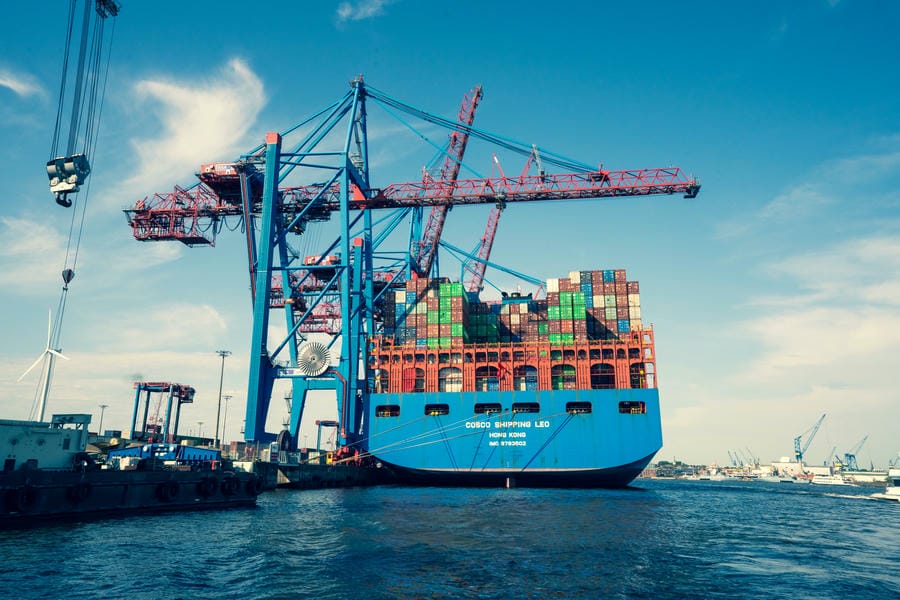
Marine Cargo Insurance at Emerge. Marine cargo is the oldest insurance product still transacted today, and in the Malaysian mid-market it's also the most under-specified. We place it as part of a broader commercial program rather than as a standalone annual renewal, which changes how we structure declaration bases, clauses, and accumulation limits.
Core covers we place
- Institute Cargo Clauses (ICC) A, B, or C. ICC(A) is an all-risks form and the market standard for most commercial shipments. ICC(B) and ICC(C) are more restrictive, named-perils forms used selectively for specific commodity types.
- War and Strikes Risks via Institute War Clauses and Institute Strikes Clauses. Increasingly material given current global shipping routes, particularly the Red Sea and Black Sea.
- Annual open cover or declaration policy for regular shipments. The declaration basis (monthly, quarterly, per-shipment) affects cost, administrative burden, and coverage accuracy.
- Single-voyage policies for one-off or high-value shipments that sit outside the annual program.
- Storage extensions for pre-shipment and post-discharge storage, typically needed for manufacturers and traders with inventory at freight forwarder warehouses.
- Specific extensions for: rejection and refusal cover, duty and consequential loss, seller's interest, buyer's interest, temperature-controlled cargo, and project cargo for oversized shipments.
Where marine cargo placements commonly break
Marine reads like a commodity on the wording. Claim experience reveals how non-commodity it actually is.
- Warehouse-to-warehouse duration. Standard cover runs warehouse-to-warehouse, but the specifics (what qualifies as a warehouse, deviations, storage at intermediate points) determine whether cover stays continuous or drops during legitimate transit events.
- Accumulation limits at ports and warehouses. Annual open covers carry per-location and per-vessel accumulation limits. For businesses consolidating shipments at Port Klang or Jurong, a single storm event or warehouse fire can exceed the per-location limit materially.
- Seller's and buyer's interest confusion. Whether cover responds depends on the Incoterm (FOB, CIF, DAP) and who had insurable interest at the moment of loss. The single most common reason marine claims are contested.
- Project cargo and oversized shipments. Specialised equipment (industrial plant, oil and gas modules, E&E production lines) often falls outside standard open cover limits and needs bespoke single-voyage placement. Commonly handled only when the shipment is imminent, by which point options are constrained.
- War and strikes coverage for current routes. Red Sea re-routing, Black Sea impacts, and vessel-specific exclusions are live issues that change pricing and terms materially. Open covers renewed 12 months ago may not reflect current conditions.
How this fits into your commercial program
Marine cargo sits alongside Fire and Property (for finished goods at your own warehouses), Liability (for product liability after delivery), and Business Interruption (for consequential loss from a transit failure). For manufacturers, the interaction between marine and BI is material: a delayed shipment of a critical component can trigger BI, and the two policies need to coordinate.
If your marine program is placed on a per-shipment basis, or if your open cover was last restructured more than 18 months ago, a 30-minute review typically surfaces a structural improvement opportunity.