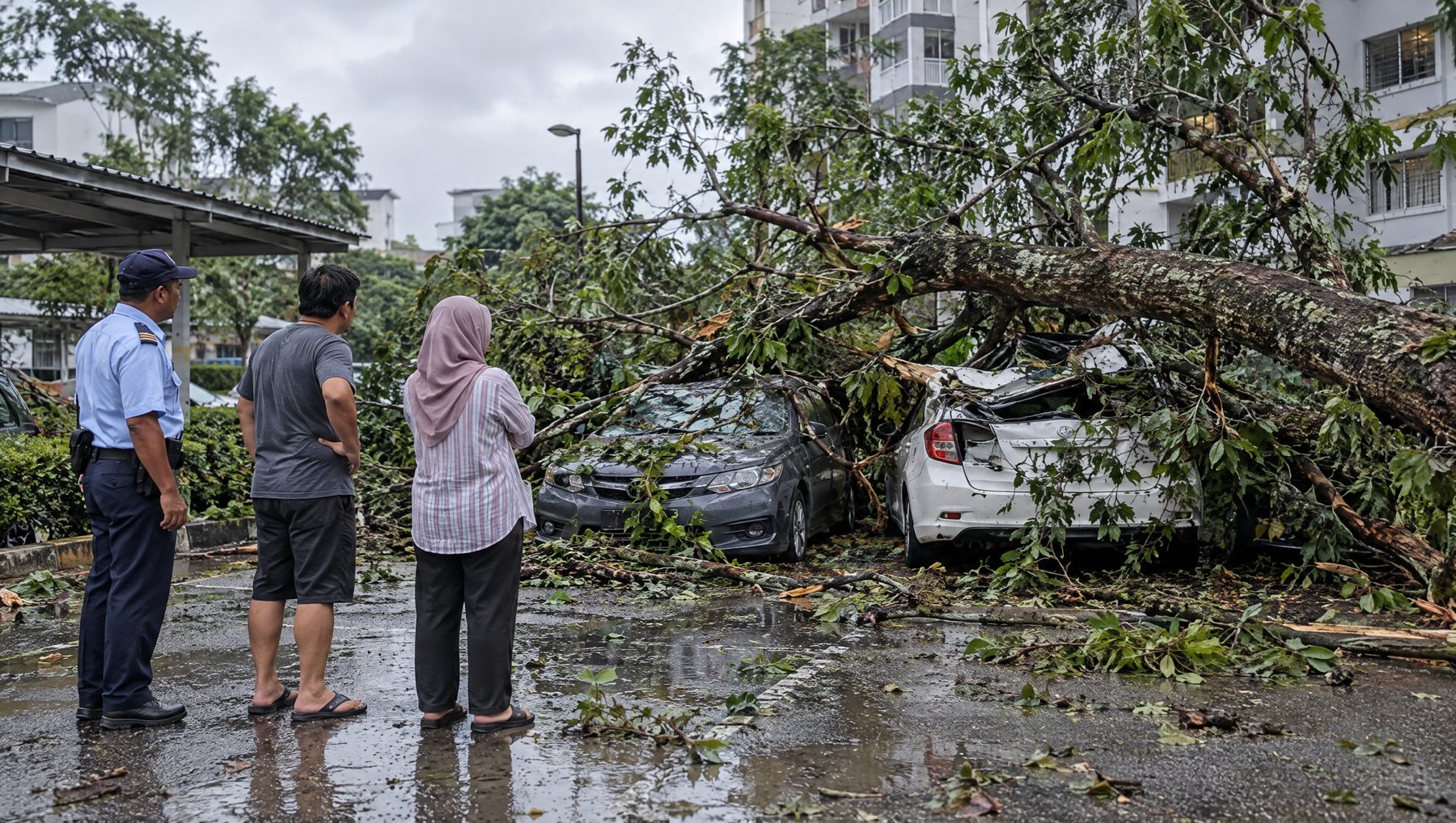
Asia carries the largest natural catastrophe protection gap in the world. Across the region, a very high share of economic losses from catastrophe events, on the order of nine in ten in recent analyses, is not covered by insurance. For a commercial property owner, that gap is not an abstract statistic. It's the portion of a typhoon or flood loss that lands directly on the balance sheet.
Natural catastrophe insurance for real estate covers physical damage to buildings and the business interruption that follows from perils such as typhoon, flood and earthquake, usually within a commercial property policy and increasingly supplemented by parametric cover.
This guide is for owners of hotels, malls, industrial and mixed-use assets across Singapore, Hong Kong, Korea and China. It explains how catastrophe cover is structured, why capacity is tightening, and where parametric cover closes gaps that a traditional property policy leaves open.
Own catastrophe-exposed property in Asia?
The catastrophe line is where property cover is most often quietly sub-limited. Emerge structures climate and catastrophe cover for real estate portfolios across the region, combining traditional property limits with parametric triggers where they help.
What natural catastrophe cover actually is
Natural catastrophe cover is the part of a property programme that responds to large natural events: windstorm and typhoon, flood, and earthquake, along with related perils like landslide and storm surge. It sits inside the commercial property policy, and it usually behaves differently from the fire cover next to it.
The key feature is that catastrophe perils are typically capped and deductible-heavy. Rather than the full sum insured, a policy may offer a catastrophe sub-limit, and instead of a flat excess, it may apply a percentage deductible on the affected asset's value. Two properties with identical sums insured can carry very different real catastrophe protection depending on how these terms are set.
That's why catastrophe cover has to be read as its own thing. The headline property limit tells you little about what you'd actually recover after a typhoon if the windstorm sub-limit is a fraction of the total and the deductible is several percent of the value.
The perils, market by market
The mistake is treating Asia as one catastrophe risk. The perils, and their severity, differ sharply across a portfolio spread over these four markets.
| Market | Primary catastrophe perils | Notes for property owners |
|---|---|---|
| Hong Kong | Typhoon, wind, flood and storm surge | Typhoon Mangkhut caused around US$470 million in insured losses in 2018; record rainfall in 2023 pressured insurers |
| Southern China | Typhoon, severe inland and urban flooding, earthquake in parts | High flood severity; foreign-exchange rules can complicate claims recovery |
| South Korea | Typhoon, urban flooding, moderate earthquake | Typhoon landfalls and localised flooding drive most property losses |
| Singapore | Flash flood; low windstorm and seismic exposure | A common master-policy hub, but ground-level flash-flood risk is real |
The regional loss numbers put the exposure in context. Aon reported around US$65 billion in economic losses from natural disasters in Asia Pacific in 2023, and 2025 brought further large events, including a major Myanmar earthquake with damage estimated by the World Bank at around US$11 billion and repeated typhoon and flood impacts across the region. Most of that was uninsured.
Why capacity is tightening
Catastrophe insurance is repricing globally, and Asia is feeling it. The driver is loss experience combined with a recognition that older catastrophe models understated how frequent and severe these events have become. Reinsurers have pushed up the cost of catastrophe capacity, and that flows straight into what property owners pay and can buy.
Three things follow for real estate owners. Deductibles are rising, often to percentage-based figures that leave a meaningful first loss with the owner. Sub-limits on catastrophe perils are tightening. And in the most exposed locations, some insurers are reducing capacity or declining risks outright, which makes how an asset is presented to the market a real factor in whether it can be covered at a sensible price.
Forward-looking research reinforces the trend. Industry catastrophe outlooks suggest flood losses in parts of Southeast Asia could grow substantially in the coming years. For a long-hold property portfolio, that's a repricing signal worth building into acquisition and capital planning now.
Wondering how your catastrophe deductibles compare across the portfolio?
Percentage deductibles and tight sub-limits are where catastrophe cover disappoints at claim stage. Emerge runs a 30-minute review of a portfolio's catastrophe terms, asset by asset, and shows where the real retained risk sits. No obligation follows.
Where parametric cover fits
Traditional property cover pays for assessed damage, after an adjustment process, and net of the deductible. Parametric cover solves a different set of problems: speed, and the gaps the indemnity policy leaves.
A parametric policy pays a pre-agreed amount when a defined trigger is crossed, for example a typhoon of a given intensity passing within a set distance of the asset, or a flood or earthquake index reaching a threshold. Because payment is tied to data rather than a loss adjuster, it can settle within days. That makes it well suited to funding a large catastrophe deductible, covering uninsured downtime at a hotel or mall, or providing liquidity while a traditional claim is assessed.
The trade-off is basis risk. If the trigger fires but your specific asset escapes serious damage, or the reverse, the payout and the loss won't match. For that reason parametric cover usually complements a traditional property programme rather than replacing it, and it works best when the trigger is calibrated tightly to the asset's real exposure.
| Feature | Traditional property catastrophe cover | Parametric catastrophe cover |
|---|---|---|
| Trigger | Assessed physical damage | A measured index or event parameter |
| Payout speed | Weeks to months | Days once the trigger is confirmed |
| Best used for | Rebuilding the asset and stock | Deductible funding, downtime, fast liquidity |
| Main limitation | Deductibles and sub-limits | Basis risk between trigger and actual loss |
Reducing the risk, and the premium
Catastrophe cover is one of the areas where physical resilience translates directly into better terms. Underwriters price expected loss, and an asset that's demonstrably harder to damage is a cheaper risk to carry.
The measures that count are specific and documentable: flood barriers and raised critical plant for flood-exposed assets, wind-rated facades and glazing for typhoon exposure, seismic detailing where relevant, and a credible business continuity plan for the downtime that follows an event. Accurate valuations and good engineering information matter just as much, because they let an underwriter price the actual asset rather than defaulting to a conservative regional assumption. For flood-specific engineering, the same discipline that applies to flood mitigation projects applies to protecting a standing asset.
| Resilience measure | Peril addressed | Effect on the risk |
|---|---|---|
| Flood barriers and raised critical plant | Flood, storm surge | Lower frequency and severity of water damage |
| Wind-rated facade and glazing | Typhoon, windstorm | Less envelope damage and water ingress |
| Seismic detailing where relevant | Earthquake | Reduced structural loss |
| Business continuity plan | All perils | Shorter downtime and lower business interruption loss |
FAQ
What is natural catastrophe insurance for real estate?
Natural catastrophe insurance for real estate covers physical damage to buildings and the resulting business interruption from perils such as typhoon, flood and earthquake. It's usually provided within a commercial property policy, often as a defined peril with its own sub-limit and deductible, and it can be supplemented by parametric cover that pays on a measured trigger.
Is natural catastrophe cover automatically included in a property policy?
Not always, and rarely on full terms. Catastrophe perils are frequently sub-limited below the total sum insured and carry separate, often percentage-based, deductibles. In higher-risk locations, insurers may exclude a peril, cap it tightly, or decline it, so the cover has to be checked peril by peril rather than assumed.
Which natural catastrophe perils affect property in Singapore, Hong Kong, Korea and China?
Hong Kong, southern China and Korea are exposed to typhoons and the flooding and wind damage they bring. China and Korea also carry inland flood and moderate earthquake exposure. Singapore has low windstorm and seismic exposure but real flash-flood risk. Each market needs its perils assessed individually rather than treated as one regional risk.
Why is natural catastrophe insurance getting more expensive in Asia?
Catastrophe losses have risen with more frequent and severe weather, and insurers are repricing accordingly. Asia carries the world's largest catastrophe protection gap, with a very high share of economic losses uninsured, and some insurers are cutting capacity in high-risk zones. The result is higher deductibles, tighter sub-limits and closer scrutiny of individual assets.
What is parametric catastrophe insurance for property?
Parametric catastrophe insurance pays a pre-agreed amount when a measured trigger is crossed, such as a typhoon of a certain intensity passing within a set distance, or a defined flood or earthquake index. Because payment is tied to data rather than a damage assessment, it settles quickly and can cover gaps like high deductibles and uninsured downtime. It carries basis risk if the trigger and the actual loss diverge.
How can a real estate owner reduce natural catastrophe premiums?
Documented physical resilience is the main lever. Flood barriers, raised critical plant, wind-rated facades and glazing, and a credible business continuity plan reduce expected loss and support better terms. Accurate valuations and quality engineering information also let underwriters price the specific asset rather than defaulting to a conservative regional assumption.
Emerge Conclusion
Natural catastrophe is the peril where a property portfolio's real protection and its headline sum insured diverge the most. Across Singapore, Hong Kong, Korea and China, the perils differ, the terms differ, and the capacity is tightening, which makes the catastrophe line the one to scrutinise rather than assume.
The question to ask about your own portfolio is what you'd actually recover after a major typhoon or flood, once the sub-limit and the percentage deductible are applied. If that number is uncomfortable, parametric cover and better structuring are the tools to close the gap.
Request a catastrophe exposure review from the Emerge Climate team →
Disclaimer: This article provides general guidance on catastrophe insurance available in Asian and global markets as of July 2026. Loss figures are drawn from published industry sources and are approximate. Policy availability, sub-limits, deductibles and terms vary significantly by carrier and location. Always review specific policy wordings and consult a qualified broker before making coverage decisions.