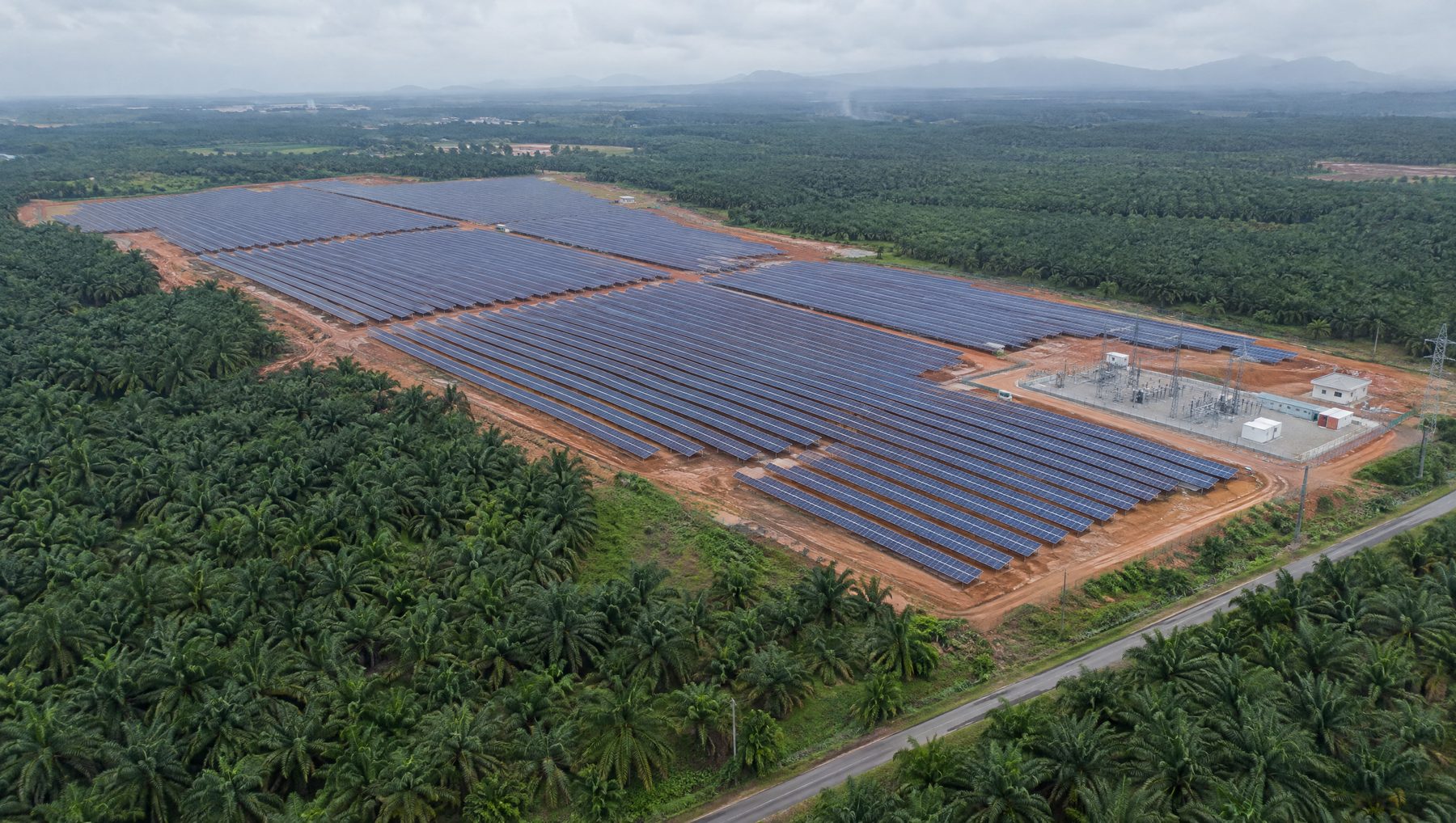
Malaysia plans for renewable energy to make up 70% of its installed power capacity by 2050, with interim shares of 31% by 2025 and 40% by 2035, under the National Energy Transition Roadmap published in 2023. That is a large amount of new physical infrastructure, financed by debt, exposed to weather, and built on technology with its own failure modes.
Renewable energy insurance is the set of specialist commercial covers that protect solar, wind, hydropower, bioenergy and battery storage projects against physical damage, equipment breakdown, third-party liability and lost revenue, across both the construction and operational phases of an asset's life.
This guide explains what those covers are, where global loss trends are pushing pricing, and how the Malaysian and Singaporean markets place this risk. It is written for developers, asset owners, EPC contractors, and the CFOs and risk managers who sign off on the financing.
Building or financing a renewable project in Malaysia or Singapore?
The gap between an EPC warranty and a bankable insurance programme is where most disputes start. Emerge's Climate Insurance team places construction and operational cover for solar, wind, hydro and storage assets across the region.
What is renewable energy insurance?
Renewable energy insurance is not a single policy. It is a programme of covers assembled around the life of a generating asset, from the moment equipment leaves the factory to decades of operation. The exact mix depends on the technology, the contract structure, and what the project's lenders require.
The core distinction is between the construction phase and the operational phase. During construction, the risk is damage to works and equipment before the asset earns anything. Once the asset is generating, the risk shifts to breakdown, catastrophe damage, and the revenue lost while the plant is offline.
A useful way to read the programme is by what each cover protects: the asset, the revenue, or third parties. Most renewable projects need all three.
| Phase | Core cover | What it protects |
|---|---|---|
| Transit | Marine cargo | Panels, turbines and equipment in transit from factory to site |
| Construction | Erection All Risks (EAR) | Physical damage to works during installation, testing and commissioning |
| Construction | Delay in Start-Up (DSU) | Expected revenue if an insured event delays commercial operation |
| Operation | Operational property damage | The asset against fire, storm, flood, lightning and other perils |
| Operation | Machinery breakdown | Inverters, transformers, turbines and other plant against sudden failure |
| Operation | Business interruption | Lost revenue while the plant is offline after an insured event |
| Both | Third-party liability | Injury to people or damage to property caused by the project |
Why an EPC contract and warranties are not insurance
This is the most common and most expensive misunderstanding in renewable energy. A developer signs an engineering, procurement and construction contract with performance guarantees, and a panel manufacturer issues a 25-year performance warranty. It feels like the project is covered. It is not.
An EPC contract allocates responsibility between two commercial parties. A warranty is a manufacturer's promise about product performance, subject to its own conditions and its own solvency. Neither pays you for a lightning strike that destroys a string of inverters, a flood that submerges a ground-mount array, or the revenue you lose while the site is rebuilt.
Here's what matters: contracts move blame, insurance moves money. When a turbine fails two years after handover, a warranty dispute can take months and may end in litigation. An operational policy pays the repair and the lost revenue while the dispute over root cause runs separately. That difference in timing is the difference between a manageable event and a covenant breach.
This is also why lenders insist on it. A bank financing a Large Scale Solar plant or a Corporate Green Power Programme project is lending against future cash flows. It requires a bankable insurance programme, with the bank named as loss payee, precisely because warranties and EPC guarantees do not protect the debt.
The global market context
Renewable energy is now a mature global insurance class, but it is repricing. The reason is loss experience. Specialist renewable energy underwriter GCube has reported an 87% increase in average claim severity over five years, driven largely by extreme weather, and has tracked more than US$1 billion in Construction All Risks and Delay in Start-Up claims across the sector.
Solar losses are concentrated in ways that surprise new buyers. In its 2024 Solar Risk Assessment, analytics firm kWh Analytics found that hail accounted for 73% of total solar industry losses by damage amount, and that standard modelling assumptions had underestimated physical damage losses by more than 300% in some catastrophe-exposed US states. Hail is a smaller peril in Southeast Asia, but the underlying lesson is not: weather damage to solar is systematically underestimated until it happens.
Battery energy storage has its own risk profile. GCube has noted that more than half of battery storage system failures occur within the first two years of operation, and high-profile incidents such as the Moss Landing fire in California have pushed insurers toward strict siting requirements, including containerised, well-spaced installations sited outside buildings. As Malaysia and Singapore add storage to firm up solar, this becomes a live underwriting question.
| Technology | Dominant loss drivers (global) | Underwriting focus |
|---|---|---|
| Solar PV | Weather (hail, storm, flood), fire, serial component defects | Natural catastrophe exposure, panel and inverter quality, siting |
| Wind | Contractor error and defect, mechanical failure, extreme wind | Construction quality, turbine track record, maintenance regime |
| Battery storage (BESS) | Thermal runaway fire, early-life failure | Cell chemistry, siting, fire separation, the first two years of operation |
| Hydro and bioenergy | Flood, mechanical breakdown, civil works failure | Hydrology, civil engineering, plant condition |
Not sure whether your programme is bankable?
Most renewable insurance disputes trace back to a gap between what the lender required and what the policy actually covers. Emerge runs a structured exposure briefing for developers, asset owners and EPC contractors, tailored to your technology and contract structure, with no obligation to proceed.
How the Southeast Asian market differs
The product exists in Malaysia and Singapore, and routine solar risks are placed locally. Standard rooftop and ground-mount solar, small to mid-size, can usually be covered through domestic capacity supported by regional and London reinsurance. The complication is at the edges.
Floating solar, large utility-scale plants, offshore wind, and battery storage often need specialist international capacity. These risks are newer, the loss data is thinner, and local insurers may be cautious or sub-limit key perils. A submission that an underwriter understands, with proper engineering detail, gets better terms than one that arrives as a generic property schedule.
Two features of the SEA market deserve attention. First, natural catastrophe exposure here is dominated by flood and storm rather than hail, so flood positioning of ground-mount and floating assets is a central underwriting question. Second, lightning density in parts of Peninsular Malaysia is among the highest in the world, which makes surge and inverter protection a real rather than theoretical concern.
| Programme | Administered by | Scale | Typical insured |
|---|---|---|---|
| Large Scale Solar (LSS5) | Energy Commission (Suruhanjaya Tenaga) | 2,000 MW quota, including up to 500 MW floating solar | Utility-scale developers and IPPs |
| Corporate Green Power Programme (CGPP) | Energy Commission | 800 MW quota, virtual power purchase model | Solar producers supplying corporate green consumers |
| Net Energy Metering 3.0 | SEDA Malaysia | 2,500 MW total across residential, commercial and government schemes | Rooftop owners, factories, commercial and industrial sites |
| Singapore national solar target | Energy Market Authority (EMA) | National target raised to 3 GWp by 2030; SolarNova drives public-sector rooftop | IPPs, commercial rooftop and public-sector estates |
Covering revenue, not just the asset
Damage to a solar panel is visible and intuitive. The revenue risk is less obvious and often larger. A renewable asset earns money only when it generates, and there are two distinct ways that earning stops.
The first is physical: the plant is damaged and offline. Business interruption and Delay in Start-Up cover respond to this, paying the revenue lost while an insured event is repaired. The second is resource: the plant is intact, but the sun or wind underdelivers. Standard property cover does nothing here because nothing is damaged.
This is where parametric resource cover comes in. A parametric policy pays out when a measured index, such as solar irradiance or wind speed, falls below an agreed threshold, regardless of whether anything broke. Payment is tied to data, so it settles fast, and it addresses a revenue gap that indemnity policies cannot. The trade-off is basis risk: if the index moves but your actual loss differs, the payout may not match the shortfall.
Who needs renewable energy insurance in Southeast Asia
The buyer is not only the developer. Exposure sits across the whole value chain, and each party needs a different part of the programme.
| Who you are | Primary exposure | Cover that responds |
|---|---|---|
| Project developer or IPP | Construction loss, delayed revenue, asset damage, lender covenants | EAR plus DSU, then operational property and business interruption |
| Commercial or industrial rooftop owner | Fire and storm damage to the array, damage to the building below | Operational property, extended from the site's fire and property programme |
| EPC contractor | Liability for defects, injury and damage during the build | Contractors' All Risks, third-party liability, professional indemnity |
| Financier or bank | Impairment of the cash flows securing the loan | Bankable programme with lender as loss payee, reviewed against facility terms |
| Corporate buyer of green power | Supply interruption, disclosure exposure under climate reporting rules | Contingent business interruption, climate disclosure-linked cover |
The regulatory layer is becoming part of this picture too. Under Malaysia's National Sustainability Reporting Framework, large listed issuers began reporting climate risk under IFRS S2 for financial years starting 1 January 2025, with the requirement extending to other issuers in stages. A renewable asset is both a climate solution and a climate-exposed asset, and how its physical risk is insured is increasingly a disclosure question, not just an operational one.
| Driver | Why it shapes the insurance programme |
|---|---|
| Lender requirements | Banks require a bankable programme, with the lender as loss payee, before drawdown on financed projects |
| National Energy Transition Roadmap targets | More installed capacity means more financed, weather-exposed assets needing construction and operational cover |
| IFRS S2 climate disclosure (NSRF in Malaysia, SGX in Singapore) | Physical climate risk to assets is now a reporting item, so how it's insured is scrutinised by boards and auditors |
| Rising global loss experience | Weather and storage losses are pushing premiums and tightening terms, making how the risk is presented matter more |
FAQ
What is renewable energy insurance?
Renewable energy insurance is a set of specialist commercial covers that protect solar, wind, hydropower, bioenergy and battery storage projects against physical damage, equipment breakdown, third-party liability and lost revenue. It spans both the construction and operational phases of an asset's life. The exact mix of policies depends on the technology, the contract structure, and the requirements of the project's lenders.
Does a renewable energy project need insurance beyond its EPC contract?
Yes. An EPC contract and manufacturer warranties allocate responsibility between commercial parties, but they are not insurance. They do not pay for natural catastrophe damage, breakdown after handover, or revenue lost while a plant is offline. Lenders financing solar, wind, hydro or storage assets in Malaysia and Singapore typically require dedicated construction and operational cover as a condition of drawdown.
What insurance does a solar or wind project need during construction?
The core construction cover is Erection All Risks, usually combined with Delay in Start-Up cover that protects expected revenue if commissioning is delayed by an insured event. Marine cargo cover protects equipment in transit, and third-party liability covers injury or damage to others during the build. Lenders generally require all of these before releasing funds.
What does operational renewable energy insurance cover?
Operational cover protects the asset once it is generating. It typically includes property damage from fire, storm, flood and lightning, machinery breakdown for inverters and transformers, and business interruption for revenue lost after an insured event. Natural catastrophe and serial defect cover are increasingly important and increasingly scrutinised by underwriters.
Why are renewable energy insurance premiums rising?
Loss data is the main driver. Renewable energy insurer GCube has reported an 87% rise in average claim severity over five years, and kWh Analytics found hail alone caused 73% of total solar industry losses by damage in its 2024 assessment. Battery storage fire risk has added further pressure on terms and siting requirements.
Is renewable energy insurance available in Malaysia and Singapore?
Yes. Construction and operational cover for solar and other renewables is placed routinely in both markets, often using local capacity supported by regional and London reinsurance. Larger or more complex risks, including floating solar and battery storage, frequently rely on specialist international capacity arranged through a broker.
What is a parametric resource shortfall policy?
A parametric resource policy pays out when a measured index, such as solar irradiance or wind speed, falls below an agreed level, rather than on proof of physical damage. It addresses revenue risk from low generation resource rather than asset damage. Because payment is tied to data, it settles quickly, though it carries basis risk if the index and the actual loss diverge.
Who needs renewable energy insurance in Southeast Asia?
Project developers, independent power producers, commercial and industrial asset owners, EPC contractors and the banks financing them all carry exposure. In Malaysia this includes Large Scale Solar bidders, Corporate Green Power Programme producers and factories installing rooftop solar under net energy metering. Each party needs a different part of the overall programme.
Emerge Conclusion
Renewable energy projects fail financially in two ways that warranties never touch: catastrophe damage to the asset, and revenue lost while it is offline or underproducing. As Malaysia and Singapore build toward their 2050 and 2030 targets, the projects getting financed cleanly are the ones with bankable, well-engineered insurance behind them.
The question worth asking about your own project is not whether you have an EPC guarantee, but whether your insurance programme would actually pay the debt if the plant went dark for six months. If you can't answer that with confidence, that is the exposure.
Request a coverage review from the Emerge Climate team →
Disclaimer: This article provides general guidance on emerging insurance categories available in Southeast Asian and global insurance markets as of July 2026. Policy availability, wording, and terms vary significantly between carriers, especially for emerging risks. Regulatory frameworks referenced may be amended. Always review specific policy wordings and consult a qualified broker before making coverage decisions.